
Oregon–Washington I-5 Bridge Replacement Gets Coast Guard Approval but Cost Balloons to $13.6 Billion

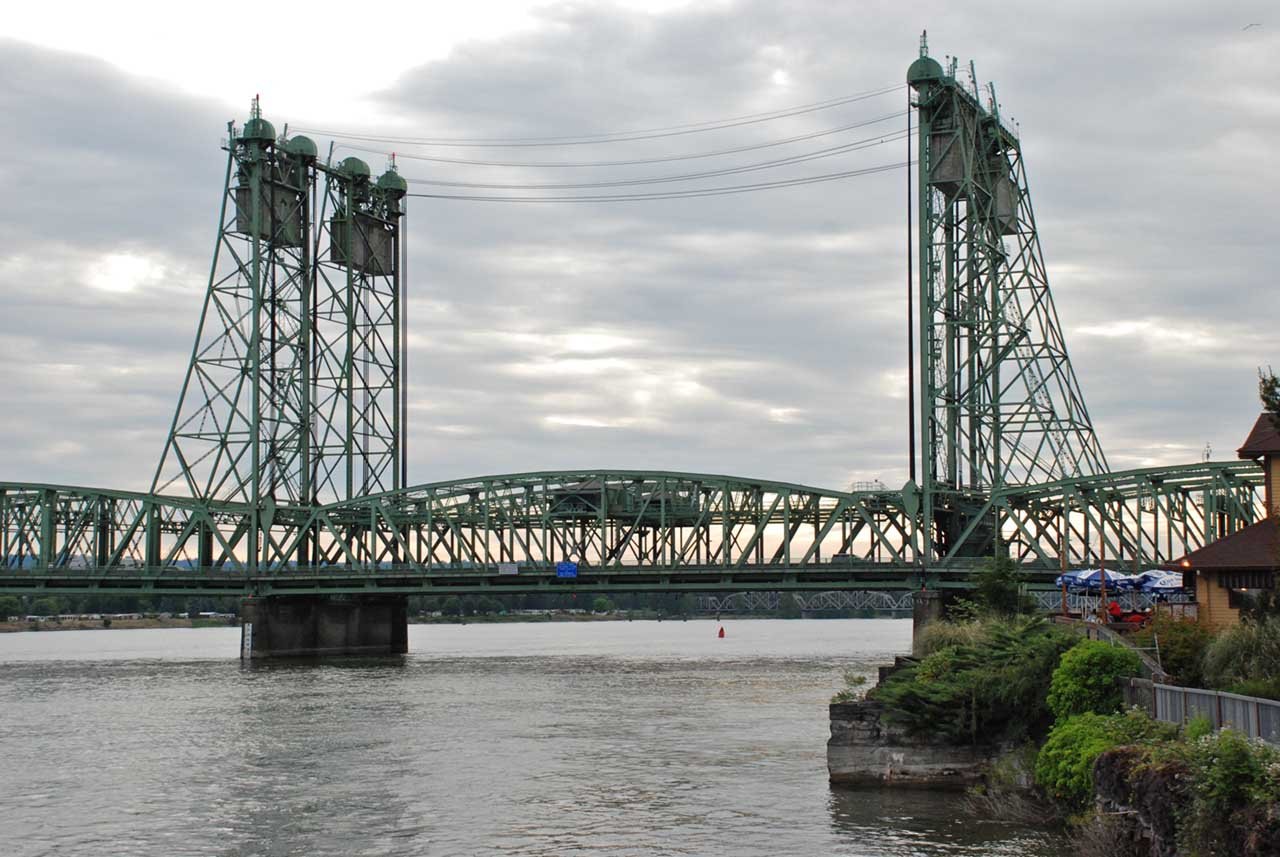
The I-5 replacement bridge across the Columbia River, which will link commuters between Oregon and Washington, will be a fixed-span construction, according to the Commander of the U.S. Coast Guard, Admiral Kevin E. Lunday, who yesterday confirmed that the mega-project has been approved by the Coast Guard.
Construction Could Begin Later This Year
The decision is a major step forward towards completion of the U.S. Department of Transportation’s environmental review, and will enable construction to begin later this year, says Senator Maria Cantwell (D-Wa) in a press statement.
Cantwell, the ranking member of the Senate Committee on Commerce, Science, and Transportation which oversees the Coast Guard, says by eliminating a lift bridge with a fixed-span on the I-5 commuter link across the Columbia River will save millions of dollars in construction costs.
“The majority of the maritime community agrees that the new bridge (fixed) design will not only allow river commerce to continue, but also improve safe passage down the river,” says Cantwell.
Lift vs. Fixed Span Bridge
A lift-span bridge would have added $400 million to an already mega-expensive project.
Currently, the lift span bridge opens between 250 and 480 times a year, depending on river levels. Delays caused by the lift-span bridge result in traffic congestion and stops of up to 20 minutes on an already clogged commuter arterial route.
Sources: WSDOT Interstate Bridge Replacement news release (Aug 8 2024); US Coast Guard I 5 Interstate Bridge Replacement public notice (Dec 2025); IBR Program Navigation Impact Report revised Oct 2025
Dailytidings.com
Existing traffic congestion, delays, risks of accidents, and freight bottlenecks will be perpetuated by a lift span bridge, officials say.
The proposed new fixed-span bridge provides 116 feet of clearance and is the first choice of replacement by transportation officials from both states.
Senator Cantwell created the National Infrastructure Project Assistance Program, which granted the I-5 bridge project $600 million in December 2023. In July 2024, a further $1.5 billion in federal funds was allocated from the Bridge Investment Program (BIP), and to date, a total of $2.1 billion in federal funds has been allocated to the project.
Here is the federal grant timeline referenced around the project’s funding totals:
| Announcement date | Program | Amount | What it funded |
|---|---|---|---|
| Dec 15 2023 | Mega Grant Program (National Infrastructure Project Assistance) | $600 million | IBR award for Interstate 5 bridge replacement |
| Aug 8 2024 | FHWA Bridge Investment Program (Large Bridge Project grant) | $1.49 billion | Replacement of the two aging vertical lift spans carrying Interstate 5 |
| Total | Announced federal grant commitments | $2.09 billion | Combined major awards listed above |
The existing Bridge Faces Collapse
Transportation leaders have warned that the bridge faces collapse, pointing out that one of the existing lift-spans is more than 100 years old.
They say a new bridge will result in fewer accidents and faster commutes between Portland and Vancouver. Daily Tidings last week reported that the cost of the Interstate 5 bridge has ballooned from a projected $6 billion to $13.6 billion.
This was established in an August 15, 2025, documentation of fixed cost estimates obtained by the Oregon Journalism Project.
The I-5 bridge replacement will undoubtedly spark fierce debate in the coming months, as lawmakers tackle delicate issues like the introduction of tolls and toll hikes, and whether taxpayers will ultimately bear the burden for a mega-project, which critics are increasingly labeling as unaffordable.