
 Add as preferred on Google
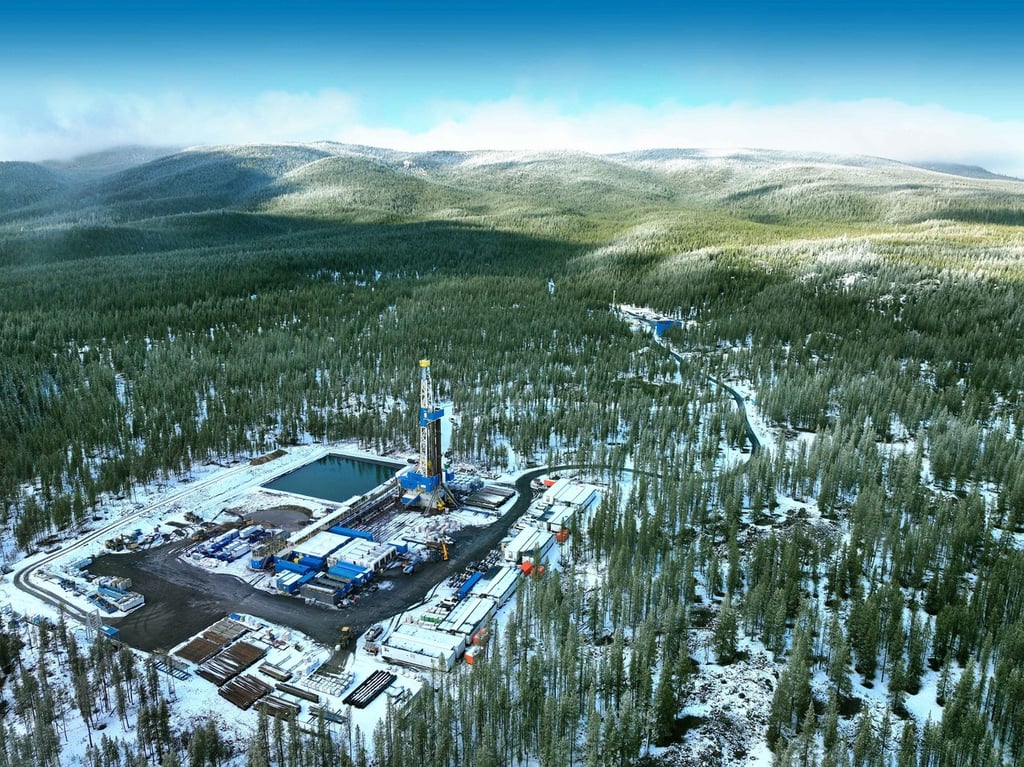
Google has agreed to buy 50 megawatts (MW) of geothermal electricity from a proposed Central Oregon power plant being developed by Quaise Energy, which would draw heat from deep underground rock near Newberry Volcano to provide a continuous source of low-carbon electricity.
Deliveries could begin as early as 2030.
Google to Buy 50 Megawatts From Proposed Central Oregon Geothermal Plant
Under the agreement announced November 17, Google would purchase electricity from Project Obsidian, located on the southern flank of Newberry Volcano. The power would support the company’s existing data center operations in The Dalles and communities in the region.
Quaise says conventional drilling will be used during the initial development phase to reach superhot geothermal conditions.
The company plans to introduce millimeter-wave drilling in a later phase. The technology is designed to penetrate extremely hot, hard rock.
Geothermal Project Plans Deep Wells and Engineered Fractures Outside Newberry Volcanic Monument
Plans laid out in a technical paper presented at the February 2026 Stanford Geothermal Workshop place the proposed site outside and adjacent to the southern boundary of the Newberry National Volcanic Monument.
The concept involves drilling to depths of approximately 4.3 to 4.9 kilometers, with two underground reservoirs targeting mean feedzone temperatures of 315°C and 365°C.
It is anticipated that the rock will have very little natural permeability. As a result, the project would use enhanced geothermal system (EGS) techniques to create fractures between wells, letting water circulate and absorb underground heat.
Google’s data center infrastructure already uses a significant amount of water to keep its systems cool.
In the Newberry concept, six flowing wells would connect to two underground reservoirs, with a binary-cycle system intended to generate at least 50 MW of electricity.
Tidings Data Snapshot
Project Obsidian’s Initial Plant ConceptFebruary 2026 design targets, subject to field testing| Design element | Planned value |
|---|---|
| Target depth | 4.3–4.9 km |
| Reservoirs | 2 |
| Flowing wells | 6 |
| Mean feedzone temperatures | 315°C / 365°C |
| Modeled net output | At least 50 MW |
The six flowing wells comprise two injection wells and four production wells. These are design targets, not demonstrated commercial output.
Source: Quaise Energy / Stanford Geothermal Workshop technical paper, February 2026DailyTidings.com
Plant Design Includes Further Testing, Seismic Monitoring and a New Transmission Connection
The development includes further drilling, laboratory testing and underground monitoring. The technical plan calls for passive microseismic monitoring to assess the risk of induced seismic activity as the underground reservoirs are developed.
A 10-mile transmission line would also be needed to connect the site to the nearest power substation in La Pine, according to Quaise’s account to OPB. From there, electricity can travel through the regional grid to The Dalles.

Be the first to comment.