
 Add as preferred on Google
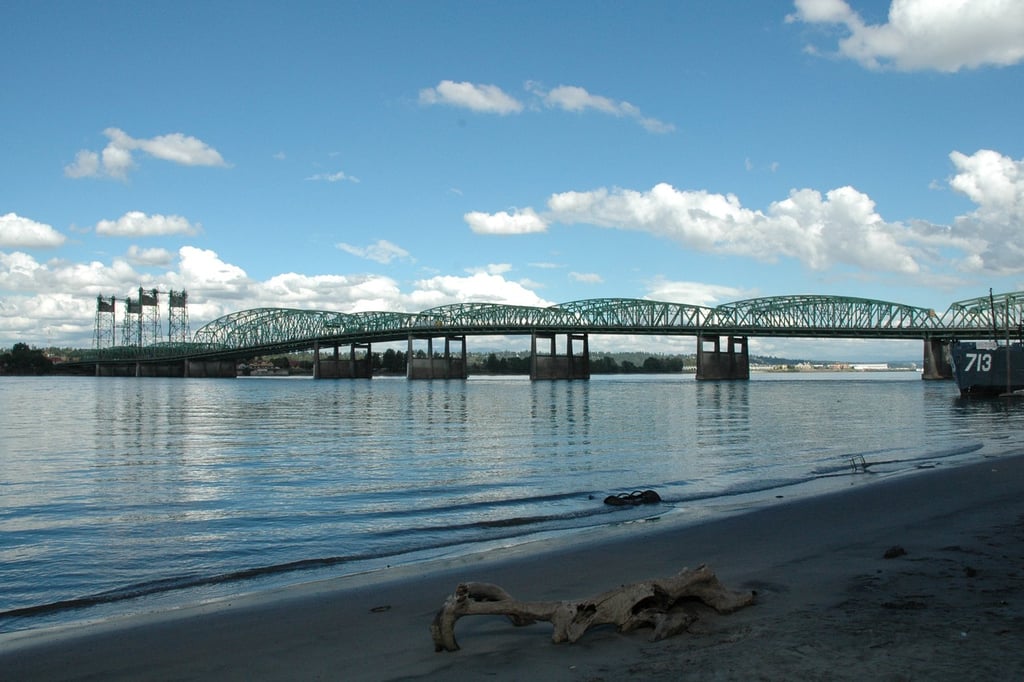
PORTLAND, Ore. — Iron Partners LLC, a maritime manufacturing and metal fabrication company, has filed a lawsuit to stop the Federal Highway Administration and related agencies from building a fixed-span bridge across the Columbia River between Oregon and Washington.
Company Says 116-Foot Clearance Is Insufficient for River Navigation
The company, which owns property and facilities along the Columbia River in both Oregon and Washington, is concerned that the planned 116-foot fixed-span clearance bridge is insufficient to serve industrial and navigation activities on the waterway.
Iron Partners, with properties in Clackamas County and Vancouver, operates water-dependent heavy equipment and industrial facilities on the river. It builds large structures such as offshore drilling platforms and bridge components, and relies on a tall bridge to move its equipment along the river.
Iron Partners is concerned that a 116-foot fixed bridge span will be inadequate for ships to pass under and will create an unreasonable navigation obstruction under the Rivers and Harbors Act of 1899 and the General Bridge Act of 1946.
Tidings Data Snapshot
The I-5 Bridge Clearance DisputeFigures are measured above Columbia River Datum. Available clearance varies with river levels.
Source: Interstate Bridge Replacement / Final SEIS, NavigationDailyTidings.com
Multibillion-Dollar Project Will Replace the Aging I-5 Bridge
The multibillion-dollar Interstate Bridge Replacement (IBR) will replace the aging Interstate 5 bridge over the Columbia River between Portland and Vancouver, and is being undertaken jointly by Oregon and Washington.
The U.S. Coast Guard issued a revised preliminary navigation-clearance determination allowing the 116-foot fixed-span design on January 16, 2026. That was a step in the bridge-permit process, rather than a final construction permit.
Bridge officials say that eliminating the need to lift the bridge will reduce traffic delays between the two states.
Current Lift-Span Bridge Causes Traffic Delays With Its Openings
The lift span opened an average of 156 times a year from 2007 through 2024, according to the program’s Final Supplemental Environmental Impact Statement, causing delays and congestion on both sides of the river. This hinders the efficient movement of services and goods in the region and across the country.
Bridge officials believe that a fixed-span bridge with 116 feet of clearance will meet the needs of air, land, and water travel, and minimize environmental impacts and constraints.
They point out that Interstate 5 is a critical link for West Coast transportation and that the first of the current bridge’s two spans opened in 1917. The existing structure is at risk of collapse in the event of a major earthquake, and no longer meets the needs of modern travel and commerce.




We need to see what the needs of Iron Partners are, and are they planning any construction East of the bridge.
$13–15 billion on a new I-5 bridge that’s 62 feet lower than the current one!