
Trump Attempt to Restrict Oregon and Washington Vote-by-Mail Fails in Federal Court
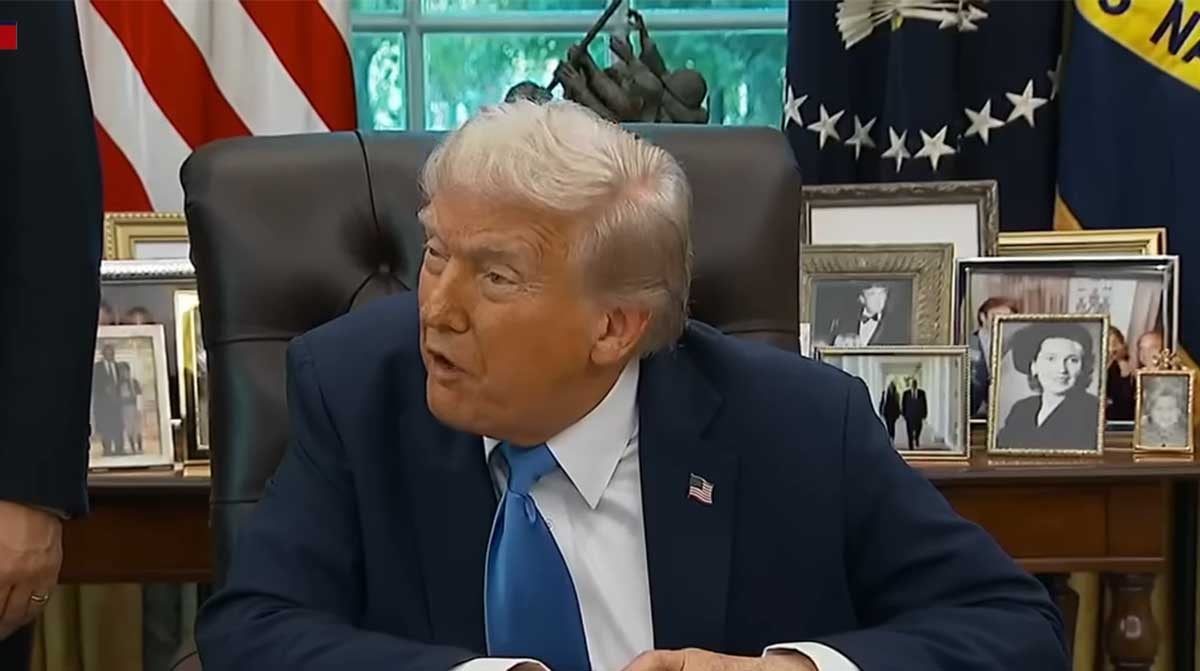
President Donald Trump has been blocked from enforcing his executive order to prevent Oregon and Washington state residents from voting by mail.
U.S. District Judge John H. Chun on Friday overturned Trump’s election executive order that documentary proof of citizenship be added to federal voter registration forms in an effort to force vote-by-mail states to exclude ballots that arrive after Election Day.
Judge Says Trump Overstepped His Authority
Judge Chun said the president overstepped his authority ‘in areas where the Constitution leaves power to Congress and the states.’ He also said that Oregon and Washington are entitled to judgment on separation-of-powers challenges to major provisions of Executive Order 14,248.
Judge Chun rejected the executive order’s effort to require that ballots be received by Election Day in Oregon and Washington. Instead, both states will continue to count ballots that are postmarked by Election Day, even if they arrive later.
Provided that ballots are postmarked no later than Election Day, Oregon counts ballots up to seven days after Election Day, and Washington up to 20 days after Election Day.
Source: AP 2024 ballot counts cited in coverage of the ruling / Oregon SOS rule OAR 165 007 0045 / Washington RCW 29A 60 190
Dailytidings.com
Judge Dismisses Attempt to Bypass Congressional Powers
A section of the executive order directs the U.S. Election Assistance Commission (EAC) to act within 30 days to require documentary proof of U.S. citizenship on federal voter registration forms.
In his ruling, Judge Chun says the EAC cannot be ordered to change a federal form ‘in an ad-hoc’ manner that bypasses Congressional procedures.
The Ruling Also Blocks an Attempt to Tie Federal Funding to Voter Registration Compliance
Chun’s ruling also permanently blocks the EAC from implementing a funding condition against Oregon and Washington.
Here is a simple breakdown of what parts of the executive order were stopped in this case:
| Executive order provision | What it tried to do | What the ruling blocks for OR and WA |
|---|---|---|
| Proof of citizenship on federal registration form | Direct the EAC to add documentary proof of citizenship to the federal form | Stops the forced change to the federal form in this case |
| Ballots received by Election Day | Require mail ballots to be in hand on Election Day | Keeps current rules: postmarked by Election Day can still count when received later |
| Funding leverage | Tie federal election grants to compliance with the order | Blocks using funding conditions against Oregon and Washington in this case |
The judge notes that Oregon and Washington told the court they have received over $33 million in EAC grants since 2020 (Oregon, more than $13 million, and Washington, more than $20M).
The two states also cite other federal election-related grant programs (DHS, FEMA), which could be withdrawn if the federal government is allowed to tie funding to voter-registration compliance.
The court uses history to undercut the “received by Election Day” interpretation. The order refers to Civil War-era voting, when some states allowed soldiers to hand ballots to military officials on Election Day. Their ballots were transmitted and received later. This is evidence that “Election Day” has not historically meant “every ballot must be in hand that day.”
Judge Chun says he is not issuing universal relief and frames the injunction as party-specific to Oregon and Washington.
Oregon Attorney General Dan Rayfield greeted Judge Chun’s ruling as a victory for the state. Rayfield says the ruling means that Oregonians can register to vote without fear of federal interference.