
Oregon Rolls Out Free Birth Control for OHP Members but Limited Pharmacy Access Threatens the Program’s Impact

Birth control and emergency contraception are now available free of cost and without prescription from Oregon pharmacies to members of the Oregon Health Plan (OHP/Medicaid).
However, while this initiative attempts to make contraception easily available, the lack of sufficient pharmacies in the state remains a major stumbling block, requiring OHP members to undertake long journeys to have prescriptions filled.
Launched yesterday, the Oregon Health Authority (OHA) and the Oregon Board of Pharmacy initiative has been made possible by placing a standing order, allowing pharmacies the leeway to dispense contraceptives to OHP members who do not have prescriptions, and then bill the OHP.
Source: Oregon Health Authority OHP reproductive health page and OHA standing order for OTC oral hormonal contraception and emergency contraception
Dailytidings.com
OHA director, Dr. Sejal Hathi, says by closing a longstanding gap between private insurance and Medicaid, OHP members will now have “greater control over their own reproductive health.”
While over-the-counter emergency contraception has been available for several years, OHP members were required to pay for the medication out of pocket or to see a doctor to obtain a prescription.
OHP members can now visit their approved pharmacy and obtain emergency contraception or the O-pill. They must provide their OHP ID number, CCO ID card, or personal information to enable pharmacies to confirm OHP status.
| Option | Active ingredient | Supply listed | Notes |
|---|---|---|---|
| Daily OTC birth control pill | Norgestrel 0.075 mg tablet | Up to a 12 month supply | Take 1 tablet daily at the same time |
| Emergency contraception | Levonorgestrel 1.5 mg tablet | 1 pack | Use as directed on package |
| OHP billing | Standing order prescriber listed | Refills as needed | OHP may be billed for medication and supplies |
Oregon Has the Second-Worst Pharmacy Access Per Capita
Oregon has the second-worst pharmacy access per capita, according to website information, with about 610 retail pharmacies serving the state’s 4,000,000-plus residents since mid-2024.
Source: Oregon Health Authority HCMO slides citing Oregon Board of Pharmacy closure counts
Dailytidings.com
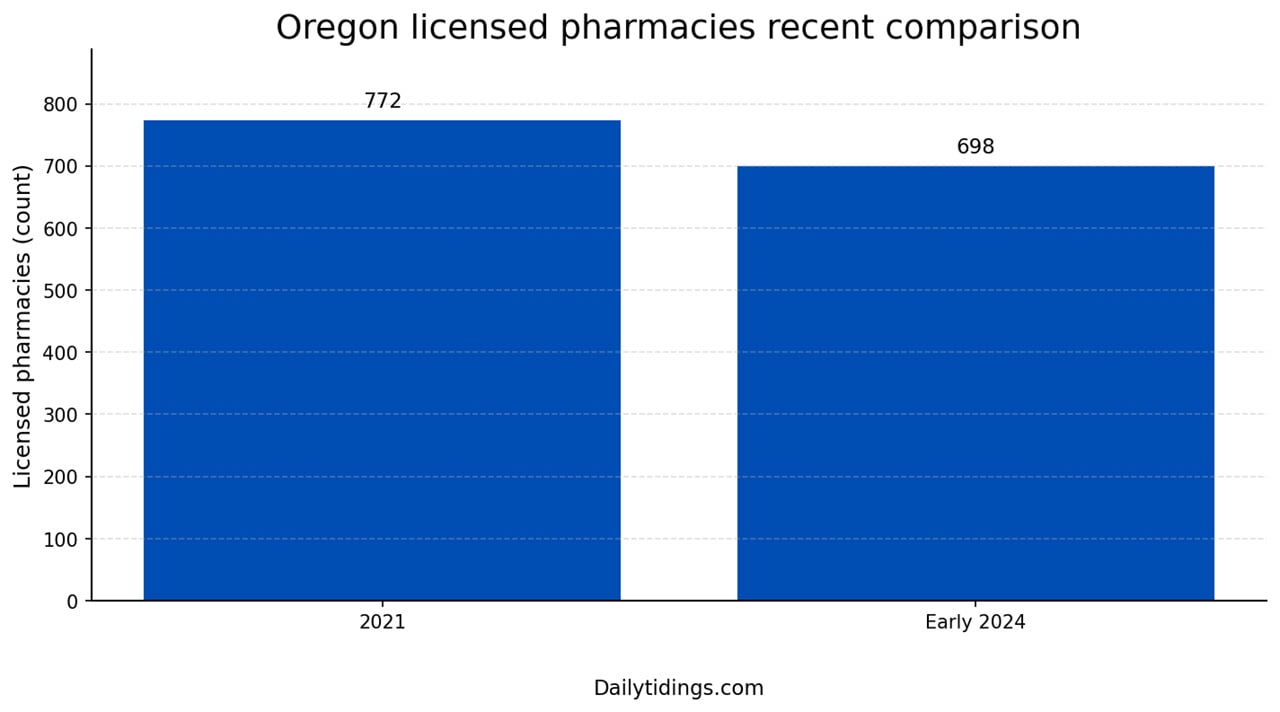
However, the numbers fluctuate as closures continue. There were 772 licensed pharmacies in 2021, but by early 2024, that figure had dropped to 698. Since 2008, more than 200 chain and independent pharmacies in Oregon have closed their doors.
Lawmakers’ Efforts Came to Naught as Pharmacy Deserts Continue to Expand
According to GoodRx, a free digital platform that helps people find the lowest prices on prescription drugs, pharmacy deserts are expanding so rapidly that 1 in 7 Americans do not have easy access to an outlet, requiring 48.4 million people to undertake a lengthy journey to have a prescription filled.
In June this year, Oregon lawmakers attempted to bolster the state’s crumbling retail pharmacy desert landscape by placing restrictive measures to regulate middlemen companies.
However, their efforts ultimately failed due to ongoing uncertainty surrounding the legislative complexities and the threat of retaliation from insurance companies.
House Bill 3213 addressed complaints by pharmacists that they are pressured by third-party administrators (middlemen) to undercut the cost of prescription drugs, forcing many pharmacies to close their doors or to drastically reduce their services.
The administrators act as middlemen between pharmaceutical manufacturers, insurance companies, and retail pharmacies.