
Oregon Universities Brace for Enrollment Cliff as Student Numbers and Revenue Fall

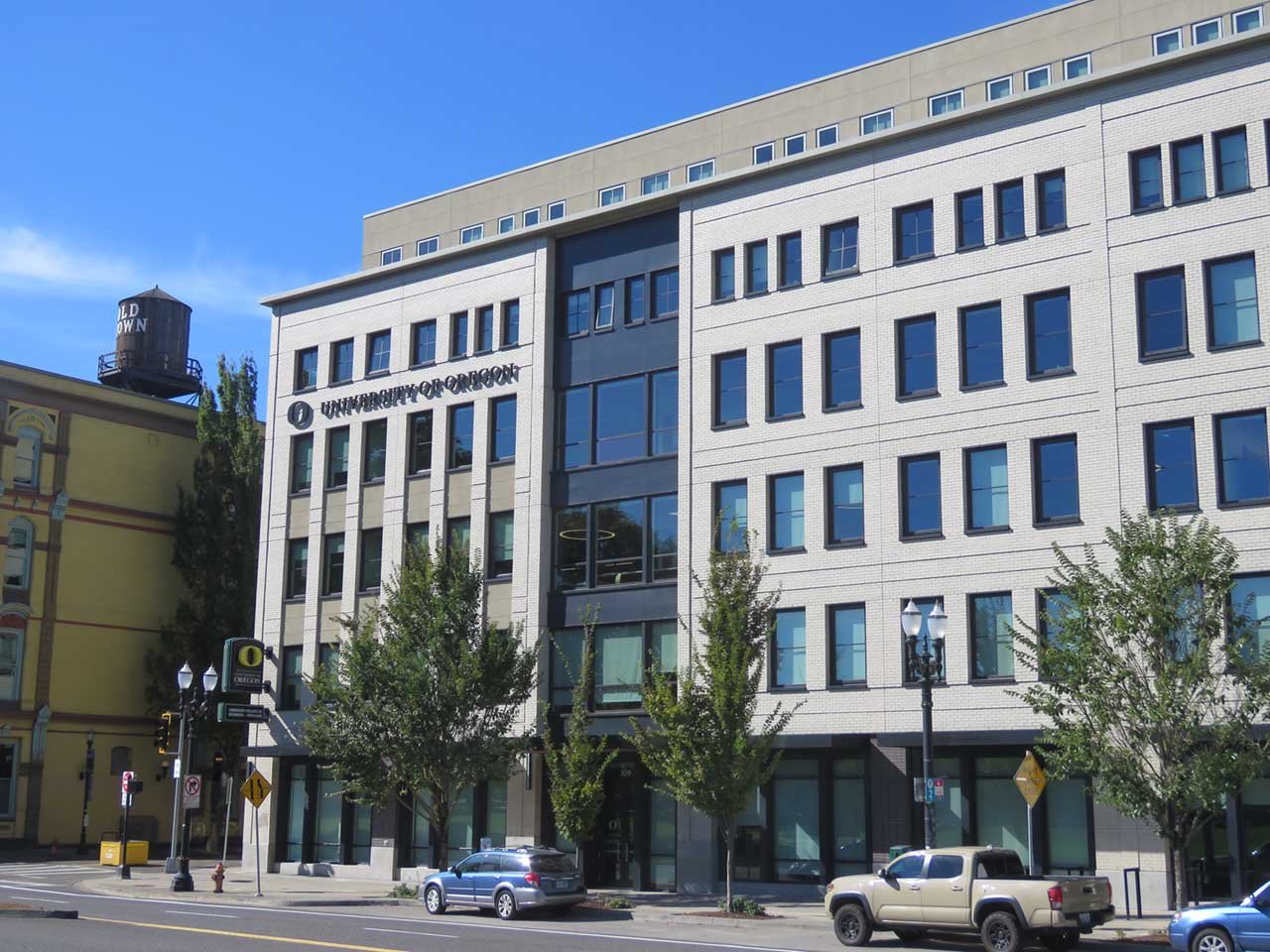
Oregon’s universities are confronting a difficult combination of declining student numbers and mounting financial pressure, as out-of-state enrollments dwindle and the state’s high school graduate population is projected to fall by 19% by 2041.
National University Enrollment Cliff
Amidst changes in immigration policy at the federal level, the decline in international students enrolling at universities has indirectly impacted the University of Oregon as well as other schools that previously relied on international students to supplement their income.
The Western Interstate Commission for Higher Education (WICHE) projects that the number of U.S. high school graduates will peak in 2025 before declining through 2041.
Compared to 2023, 38 states are projected to see fewer high school graduates by 2041.
Source: WICHE projections comparing 2023 with 2041
Dailytidings.com
The numbers are expected to decline steadily through 2041- a 13% decline from the peak. The West is projected to experience an overall 20% decline, with Oregon expected to see a 19% drop.
Financial pressure comes as universities across the country face what is known as the “enrollment cliff.”
Oregon Universities Facing Budgeting Challenges
In a typical year at UO, roughly 2,400 non-resident students enroll. This year, it’s about 1,900 students, fewer than during the pandemic.
The University is developing a plan to close a projected $65 million budget shortfall following the significant decline in out-of-state student enrollment.
UO President Karl Scholz said the university is experiencing “significantly lower incoming out-of-state first-year enrollment” and, consequently, lower tuition revenue.
The university has historically relied heavily on non-resident students to supplement relatively low levels of state funding.
UO had already eliminated 176 positions through $29.2 million in recurring cuts announced in September 2025. Further proposals will be released for public feedback in October, with final decisions expected in December.
Southern Oregon University is also already making substantial cuts. Its new budget includes a plan to reduce spending by $20 million as part of its Vitality Plan.
| Measure | University of Oregon | Southern Oregon University |
| Current financial target | $65M deficit reduction | $20M annual savings |
| Enrollment pressure | 500+ fewer nonresident freshmen than normal | Declining overall enrollment |
| Budget scale | $40,000 average net tuition per nonresident student | About $100M annual budget |
| State intervention | None cited for current deficit | $15M emergency bridge funding |
Sources: University of Oregon / Southern Oregon University
Dailytidings.com
SOU forecasts a 16% fall in enrollment, compared with an earlier estimate of 10%. Despite receiving $15 million in anticipated emergency state funding, the university is forecast to run out of cash next June unless major reductions are made.
For Oregon’s universities, the demographic shift is no longer simply a future concern. It is increasingly becoming a budget problem.