
Oregon Scientists Warn Wildfires Can Create Toxic Chromium That Lingers in Groundwater for Years
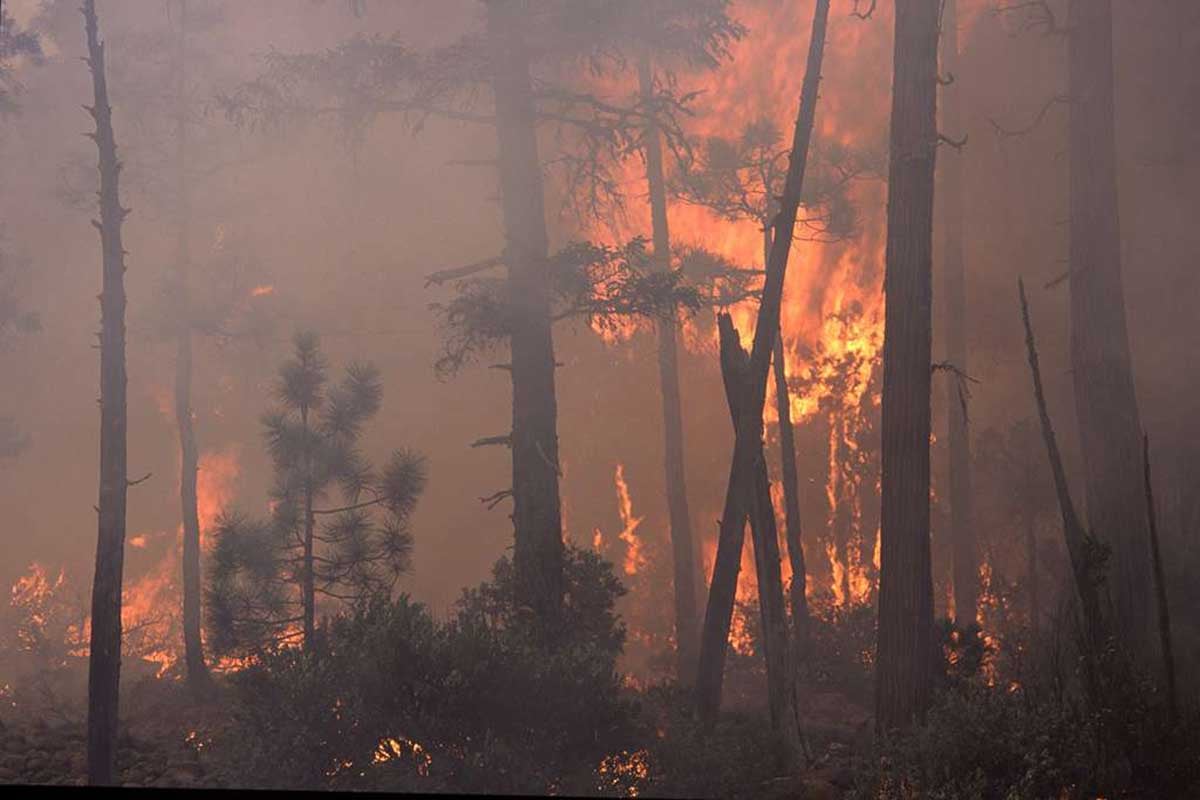
Research published in November by the University of Oregon noted that serpentine rocks rich in Chromium-3- a vital micronutrient- can become a toxic heavy metal when exposed to the extreme heat produced during a wildfire, and this toxin could eventually make its way into groundwater.
Research On Oregon Wildfires Shows How Extreme Heat Can Turn Chromium Into A Toxic Contaminant
Chelsea Obeidy, a soil scientist now at California State Polytechnic University, led the study as a doctoral student in the lab of professor Matthew Polizzotto, an earth scientist and environmental chemist at the UO.
Chromium 3 supports metabolic function in humans, but chromium 6, often a byproduct of industrial processes, is a Class A carcinogen linked to lung, sinus and nasal cancer. Oxidation converts chromium 3 to chromium 6, a process that can happen over time as rocks weather away or are exposed to extreme heat.
Chromium converts from benign form in rocks and soil to carcinogenic in the presence of extreme heat during wildfires.
In simulated wildfire experiments done on soils from samples across Eight Dollar Mountain in the Rogue River-Siskiyou National Forest naturally rich in chromium, the researchers noted that that fires reaching 750 to 1,100 degrees Fahrenheit created the highest amount of the harmful contaminant.
Source: University of Oregon wildfire simulation study at Eight Dollar Mountain
Dailytidings.com
Soils from at and near the summit contained the most chromium 6 when burned around 750 F, because summits experience the most weathering. The rocks break down and release more chromium 3 into the soil, leaving more available that can be converted to chromium 6 under the right conditions.
Closer to the bottom of the slope, chromium 6 emerged at higher temperatures, around 1,100 F. Depending on the slope position, chromium 6 could taint groundwater above EPA standards for six months to almost 2.5 years.
Wildfires can vary in temperature, but can fall in this range, although the researchers said more investigation must be done into the effect of prescribed or cultural burns, that didn’t seem to create much chromium 6.
Oregon Well Water Susceptible To Contaminants From Wildfires
According to the Oregon Health Authority (OHA), nearly 23% of Oregonians rely on domestic wells, or private wells, as their primary source of potable water. But private wells are not maintained or regulated by the state or county government.
Source: Deschutes County Environmental Health private well safety overview
Dailytidings.com
Often, these wells that are not routinely monitored like public systems, and post-fire groundwater contamination could show up first in household drinking water with no automatic warning system.
If you own a private well, you are responsible for routine well water testing to be sure the water is safe to drink as well as well maintenance and treatment.
If your area burned hot, this is the OHA testing list to consider for private wells:
| Test | Why it matters after wildfire | Notes |
|---|---|---|
| Arsenic | Can be mobilized into groundwater after severe disturbance | OHA lists this as a recommended test |
| Nitrate | Common groundwater contaminant that can spike after landscape changes | OHA lists this as a recommended test |
| Bacteria | Damage to wellhead or system can introduce pathogens | OHA lists this as a recommended test |
| Lead | Plumbing and fixtures can leach metals if damaged or disturbed | OHA lists this as a recommended test |
| BTEX VOCs | Fuel and chemical residues can contaminate water after fire impacts | OHA says this depends on damage assessment results |
The well owner is responsible for the safety of the well water. OHA recommends that well water is tested every year and maintained regularly. OHA resources to drinking well water include: