
Oregon Extends Homelessness Emergency as State Now Leads Nation in Unsheltered Children
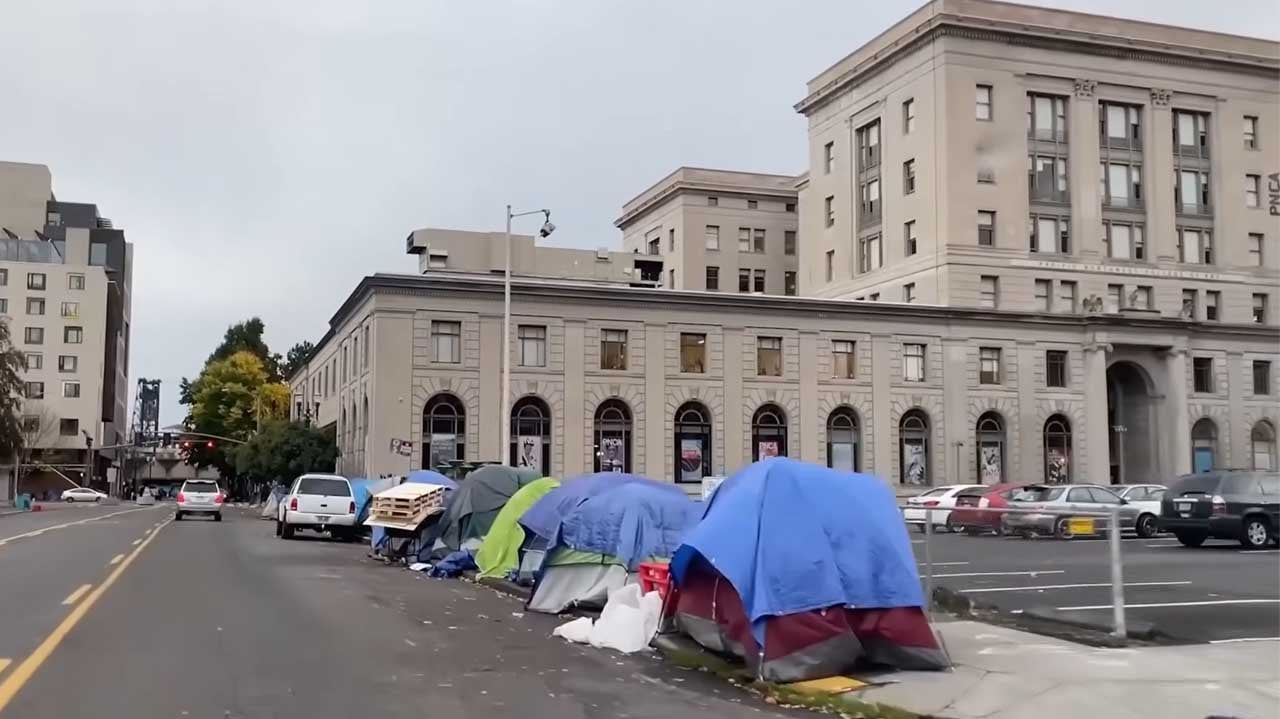
Oregon Governor Tina Kotek yesterday extended the state of emergency on unsheltered homelessness, spotlighting drug addiction and mental health as issues that continue to threaten public safety and economic stability.
Emergency actions by the state between January 2023 and September 2025 saw the creation of 6,286 new shelter beds and the rehousing of 5,539 Oregonians. A further 25,942 households received prevention assistance.
Source: Oregon Governor’s Office press release Jan 9 2026 on extending the homelessness emergency
Dailytidings.com
Despite this progress, a significant number of homeless people suffer from substance abuse, serious mental health illnesses, traumatic brain injuries, and other behavioral health conditions that lead to emergency rooms, jails, psychiatric facilities, and other crisis systems.
The Crisis Required More Housing and Health Care Facilities
Kotek says the situation highlights the need for sustained and integrated health care solutions and housing, adding that the state will continue to expand the number of treatment beds and strengthen the behavioral health workforce.
The Governor first declared a state of emergency regarding homelessness in January 2023 in regions where there were increases of 50% or more between 2017 and 2022. Since then, the emergency has been extended by executive order on several occasions.
Housing Saves Lives
“Housing saves lives, and stability and success occur when people also have access to treatment, care, and ongoing support.” This was the reaction to the governor’s extended state of emergency by the former executive director of Blanchet House, Scott Kerman.
Kotek says the state will release $19 million from previously allocated funds to expand services to homeless people facing legal actions and who are unable to assist in their own defense.
| Item | Target or investment | What it supports |
|---|---|---|
| Rehousing | 1,400 additional households | Moving people from unsheltered homelessness into housing |
| Prevention | 8,000 plus households | Keeping people housed before they lose housing |
| Permanent supportive housing | $20 million in the 2025 to 2027 biennium | Intensive housing plus services for people with high needs |
| Justice system connected services | $19 million released | Capacity for people unable to aid and assist in their own defense |
| Transitional housing | 36 beds in Clackamas County | Step down housing tied to services |
| Treatment capacity | 72 additional beds | Secure and non residential treatment facilities |
The investment will also create 36 transitional beds in Clackamas County and 72 additional beds for people needing treatment.
The extended state of emergency applies to the independent Metro Region Continuums of Care (CoCs) for Central Oregon, Clatsop County, Eugene and Springfield in Lane County, Medford and Ashland in Jackson County, Salem and Marion and Polk Counties, Linn County, and Malheur County.
The state of emergency will remain in place until January 10, 2027.
Oregon Has the Highest Rate of Unsheltered Child Homelessness in the U.S.
Oregon’s rate of unsheltered child homelessness is more than 14 times higher than the national average, ranking as number one nationwide in this category. The Oregon rate is 19.9 per 10,000 children who live on the streets, compared to the national average of 1.4 per 10,000 children.
Source: Oregon Housing and Community Services State of the State’s Housing Report / PIT based child unsheltered rate
Dailytidings.com
Data from McKinney-Vento, a U.S. federal law that protects homeless children, states that the number of homeless students has increased by 17% in recent times.
Nine Oregon school districts reported a 10% rate of homelessness among students. Two rural districts have 20% or more children without a home.
According to the state’s Department of Housing and Community Services, the critical shortage of housing in Oregon was created by decades of building fewer homes than needed to cater to a rapid growth in population. The crisis continues to impact low-income households and Black, Indigenous People of Color (BIPOC).
According to the report, housing stability requires effective solutions from the Legislature, as well as coordination and collaboration between local, state, and federal agencies.
Yup! Leads the nation! Homelessness and mostly drug addicts. That’s because we are spending hundreds of millions of dollars On it (money that could be going to fix our roads and bridges). And the more that gets spent, the more homeless and drug addicts will be attracted to this state. Great going, Kotek! Oh, you are so successful!!!