
New Report Shows Oregon Homelessness Growing Faster Than Shelter Expansion
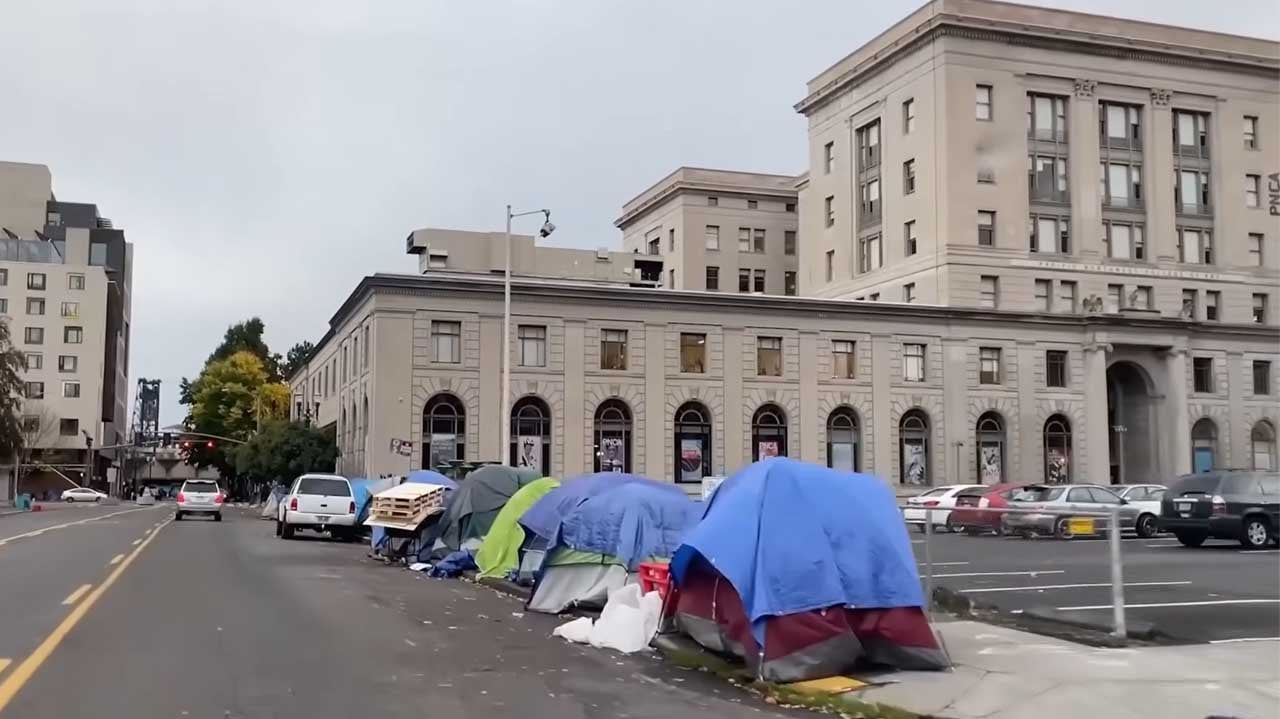
Portland State University’s 2025 Oregon homelessness report reflects the increasing number of homeless people in the state and, despite more people being sheltered, economic insecurity and Oregon’s shortage of affordable housing are leaving ever more people unhoused. Wage increases of half the rate of rent increases exacerbate the problem.
Homelessness In Oregon Increases
Released in January, Portland State University’s Homelessness Research & Action Collaborative (HRAC) 2025 report shows a rise in counts driven by better data.
The report shows historic gains in shelter capacity, with 50% more people sheltered, but the total number of people experiencing homelessness continues to rise.
Based on the 2025 Point-in-Time (PIT) Count in January, which recorded 27,119 people experiencing homelessness across Oregon, the report also noted that between January 2023 and January 2025, the state added 3,094 year-round shelter beds, increasing total capacity by 39% and enabling a 49% increase in sheltered homelessness.
Source: Portland State University HRAC 2025 statewide homelessness report / 2025 PIT and shelter inventory results
Dailytidings.com
As a result, 3,501 more people were indoors and connected to services than in 2023, but the count again showed sharp disparities for communities of color. The 2025 Oregon homeless report shows:
- 27,119 were experiencing homelessness in Oregon in January 2025
- 10,607 people were sheltered on the night of the count (a 49.3% increase from 2023).
- 11,047 shelter beds are available year-round in Oregon (a 39% increase from 2023).
- 16,512 people are experiencing unsheltered homelessness, living in spaces not intended for human habitation, such as sidewalks or vehicles.
- 21,542 (estimate) people are experiencing “doubled-up” homelessness (living with others by necessity rather than choice).
Click here to see the 2025 report, including county-by-county breakdowns.
Rents Rise Faster Than Wages In Oregon
Oregon’s homelessness numbers continue to increase despite shelter expansions, as rapidly rising rents and stagnant wages for low-income workers push more people into housing instability faster than the state can build or fund permanent solutions.
A State of the State’s Housing Report noted that average Oregon rents surged by 7% (nearly $100) between 2020 and 2021, followed by an almost 9% increase (about $169) in 2022.
Compounded by slow income growth for rental households as wages failed to keep up with rent increases, between 2020 and 2022, for every dollar increase in wages, an additional $2 went towards rent.
While rents continue to increase faster than wages, affordable housing construction is not happening fast enough, either.
Oregon Housing and Community Services confirmed that the state needs to add nearly 500,000 housing units in the next 20 years.
This is the state level housing need behind the long runway to reduce homelessness.
| Metric | Number | What it represents |
|---|---|---|
| Total housing need | 494,503 units | All units needed across 20 years |
| Current need | 95,937 units | Backlog to address earlier, within 10 years |
| Future need | 398,566 units | Growth and other drivers across the 20 year horizon |
| Annual production target | 29,522 units per year | Current need spread over 10 years plus future need over 20 years |
Source: Oregon Housing and Community Services State of the State’s Housing Report summary / average 1 bedroom rent and income needed to avoid rent burden
Dailytidings.com
Is anyone really surprised that so-called Homelessness is increasing in Oregon? Oregon is spending hundreds of millions. Kotek has proposed spending 2 Billion on Homelessness. The more that is spent, the more the so-called “Non Profit organizations get rich. Surprise!! Further Oregon has become a “Magnet” for homelessness because the more food, housing and cell phones that are provided, the more the Homeless population will grow and continue to grow. Up to 88% of Homelessness is tied to addiction. Many of the addicts do not want to be housed.